September 16, 2026
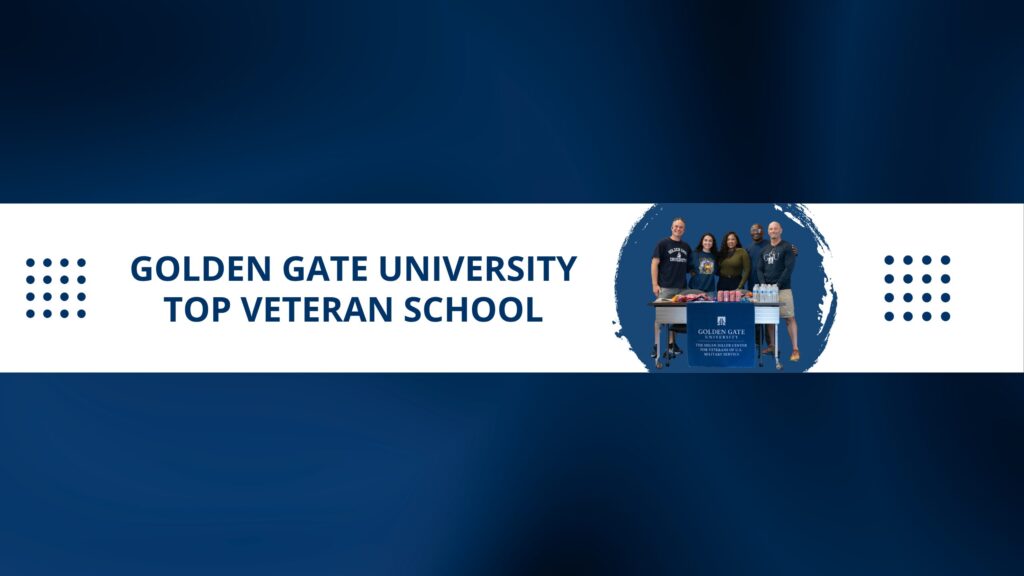
U.S. Veterans Magazine names Golden Gate University a 2026 Top Veteran School
U.S. Veterans Magazine has named Golden Gate University a 2026 Top Veteran School, recognizing its support for veterans from enrollment to career.
Learn more about Campus Weekend!
Published
July 18th, 2025
Share
For Sydney Woodward, a professional journey that started with an unexpected business class lecture has grown into an award-winning financial planning career that is built on a foundation of empathy, strategy, and a deep-seated desire to connect with people.
Originally from Virginia, Sydney started her undergraduate studies at Virginia Tech as an undecided business major. “I knew that I loved numbers and problem-solving,” she recalls, “and I also knew that I loved working with people and really getting to see the impact of my work. I wanted to feel fulfilled in that way.”
The lightbulb moment came during a sophomore-year finance class where directors from different concentrations presented about their fields.
“The director of the financial planning program at Virginia Tech came in and was talking about a profession that is very focused on people, strategy, numbers, but really focused on the people piece being the most important—building relationships. That just really spoke to me,” Sydney says. “I started taking the first class in that program and never looked back.”
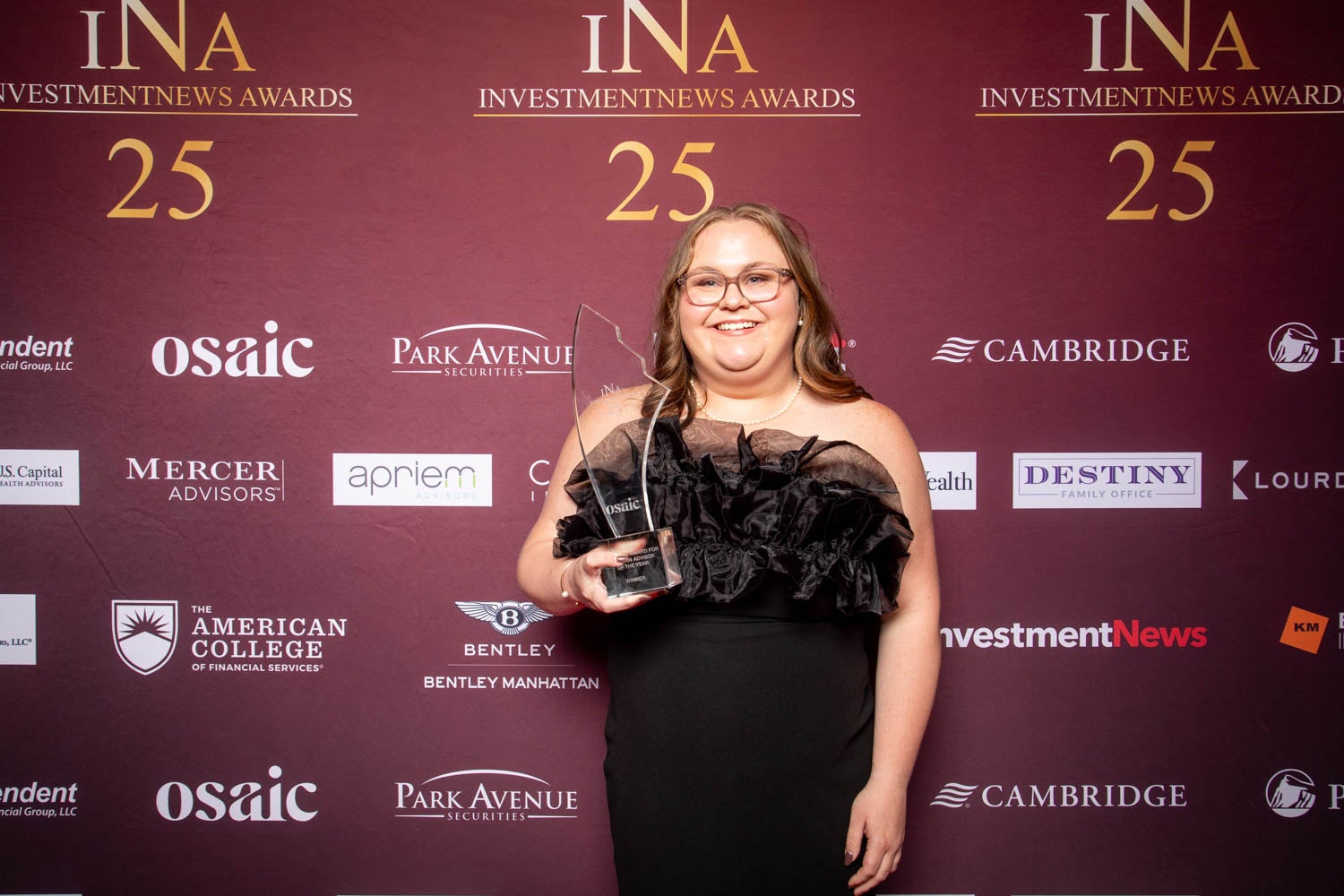
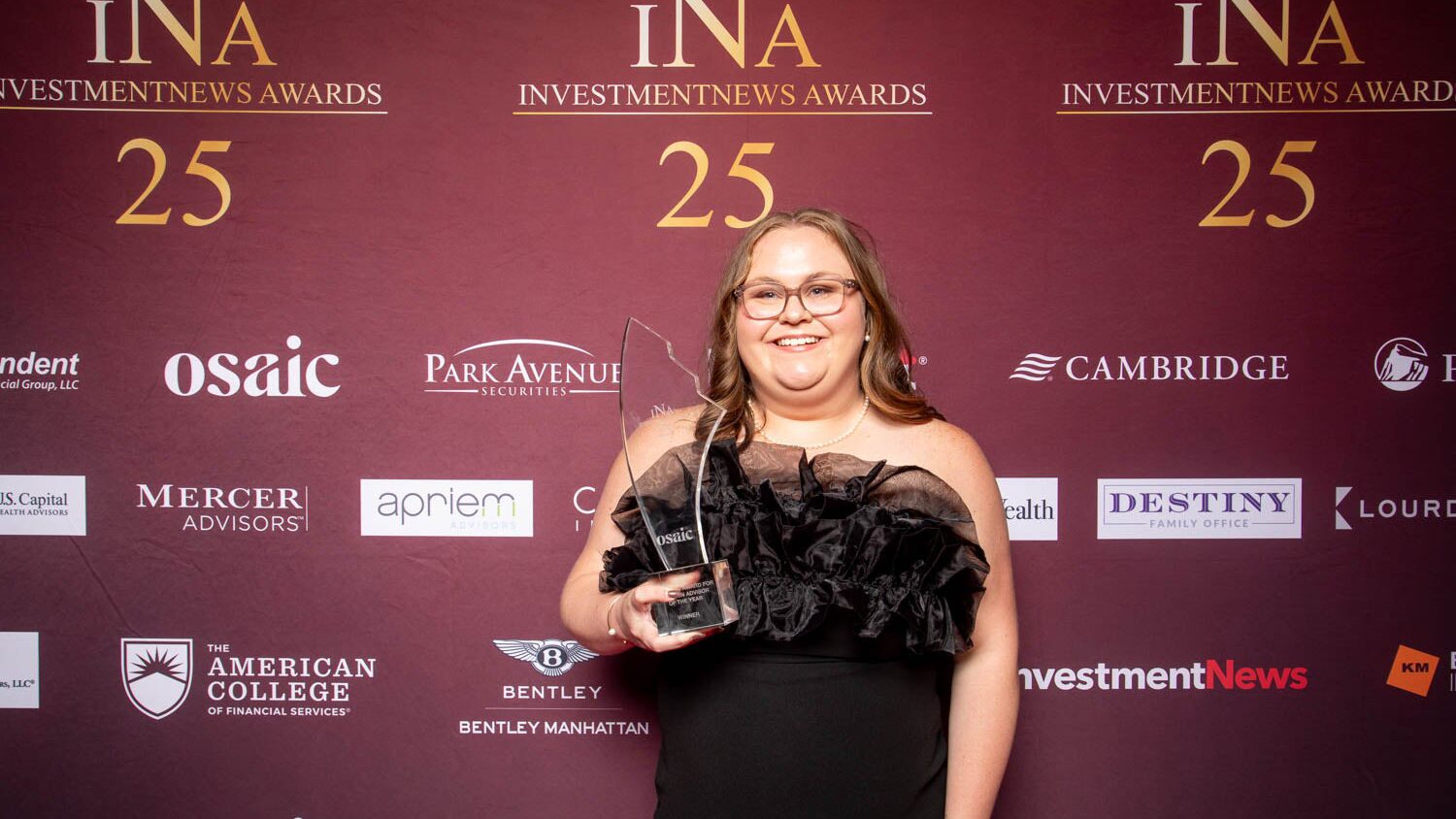
Recently honored with InvestmentNews’ The Osaic Award for NextGen Advisor of the Year — an award that recognizes advisors for excellence in their first three years as a lead planner — Sydney embodies the next generation of financial professionals.
Through her work at Yeske Buie, a Bay Area financial planning firm, she represents a movement in the industry toward advisors who are deeply focused on all aspects of a client’s financial and personal goals.
“It’s very humbling to receive the award,” Sydney shares. “It wasn’t something I was specifically going after, but it’s just such a sweet recognition of what I’ve been contributing to the profession through pro bono work and my daily work with clients.”
For Sydney, a typical week is made up of a dynamic blend of client meetings, team collaboration, and analytical work. Recently, her primary function has transitioned more into the relationship manager while also balancing the analytical pieces of the job. She enjoys spending her time in client meetings, “being that person that’s talking about the projections and having those relationship-building moments with clients.”
This often means being a “thought partner,” someone clients can call whenever something comes up. Sydney shares that what might come as a surprise to people is the depth of those conversations. Financial planning, in her view, is deeply intertwined with client emotions.
“It’s having really hard conversations and being able to manage emotion and talk through really challenging things,” she shares. “Clients will come to you with topics that might not outwardly be numbers-related, but it affects how they manage their money. For example, a client might say, ‘Hey, we’re having a really hard time within our marriage,’ or ‘One of my children is going through a really hard time and they’re struggling with addiction. How do I make sure that I’m protecting myself financially and also supporting them?’”
“All of the interpersonal pieces were somewhat of a shock to me when I first started in the profession,” she admits, “but it’s such a rewarding part of the work.” This psychological element, she believes, is crucial for the future of the industry. “I think behavioral finance is going to be such an important skill for the future of planning,” she notes. “Being able to dive deep into understanding a client’s bias, what holds them back from taking risks, and what motivates them to make change is going to be really important for advisors.”
For an experienced professional like Sydney, pursuing a master’s degree was about diving deeper into the field and gaining advanced expertise. “I’m very connected with GGU because Dave Yeske, one of the founders of our firm, used to be the Director of the financial planning program at GGU,” she states. “A number of our other teammates have also earned their master’s degrees through the program, so I’m very excited to be continuing my education at Golden Gate University.”
She was also drawn to GGU’s Master’s in Advanced Financial Planning program for its reputation and its specialized concentrations in tax, estate planning, and life planning.
Sydney chose the estate planning concentration, inspired by colleagues who have become go-to experts after graduating from GGU. “I’m really looking forward to having a skill set that can help support the clients that I touch, but also clients that I’m not directly involved with,” she says.
“The Chief Planning Officer at Yeske Buie, Lauren, who has also gone through the MS in Advanced Financial Planning program, graduated with a tax planning concentration. Now, she’s our firm’s master in all things tax. The prospect of being able to have that same value-add to the rest of the team after completing my estate planning concentration is exciting.”
The specialized knowledge offered in GGU’s MS in Advanced Financial Planning program, she believes, is a key differentiator for planners, especially in initial meetings. “If a client tells you one of the things that’s currently top of mind for them is this really complex situation related to their estate, being able to address that and have a deeper conversation about the complexities rather than a surface level one really helps build trust with clients.”
As someone who practices holistic financial planning, Sydney also recognizes that her own approach aligns perfectly with the philosophy at GGU. Before crunching a single number, her team conducts a 90-minute discovery meeting. “We’re talking about everything except for the numbers,” she says. “Really diving into their past, their present, and their future and envisioning what their goals are.”
This deep understanding of a client’s values becomes the lens for all financial advice. “There’s often a numbers answer of what makes the most sense from a financial aspect, but if it doesn’t align with their values, then that’s not the right answer,” Sydney states. “My opinion is that holistic financial planning is the best way to be a financial planner. And again, it’s because money touches everything. If you’re only focusing on one thing, you’re missing 95% of the rest of the things that money touches.”

With the world of finance constantly evolving, Sydney says that she views emerging technology as a tool, not a threat. She sees advances in technology and AI as excellent tools for saving time and streamlining administrative work so that planners are able to spend more time connecting with clients.
“AI won’t take over financial planning if you’re doing financial planning the right way, which is being people-focused,” she says. “It is not going to be able to hold space with a client who is going through something really emotional and sit there with them and hold their hand. And that’s part of the job.”
To stay current, she also relies on a mix of formal and informal education. “I attend a lot of conferences every year, and it’s really valuable to connect with others in the profession,” she says, mentioning her involvement on the board for the San Francisco chapter of the Financial Planning Association. This, along with reading blogs from industry leaders like Michael Kitces and professional journals, helps her “bridge any gaps” and stay on top of new trends and topics in the financial space.
Having navigated the early years of her career with remarkable success, Sydney offers heartfelt advice for aspiring financial planners: embrace authenticity.
“One of the things that I struggled with when I first started was the comparison game,” she admits. “Like, ‘What if this other advisor was in this meeting? How would they have worded this?’ It’s so important to learn the skill of knowing that you’re not the same as other advisors and trusting that you’re a great advisor in and of yourself. Continuing to show up authentically and caring for your clients builds trust — that’s the baseline of the profession.”
Sydney also emphasizes the profound privilege of the work that she and other financial planners get to do on a daily basis.
“It’s truly a privilege to be able to hear people’s stories and be a part of their life in such a big way,” she says. “Remembering that during challenging times is something that keeps me going. I hope that young advisors who are joining the profession see how impactful their work is, but also how much impact that this work has on you as a human being.”
As Sydney embarks on her academic chapter at GGU, her journey serves as a powerful example of the evolving world of financial planning—a profession where success is measured not just in portfolios, but in the strength of human connection.

The Master of Science in Advanced Financial Planning is an innovative degree designed for financial planners who have already passed the CFP® examination and want to reinforce key planning skills, build expertise in the critical areas of taxation, estate planning, or financial life planning, and add the weight of a master’s degree to their professional credentials.
GGU’s Advanced Financial Planning program empowers students to build on their CFP® background and move directly into advanced study in their chosen field. This program is particularly well-suited for more experienced planners who aim to take their careers to a higher level.
Explore our Master’s in Advanced Financial Planning program page for more information about our curriculum, online and hybrid options, learning outcomes, and admission requirements.