Environmental Law And Justice Clinic
Founded in 1994 in consultation with community leaders, the Environmental Law and Justice Clinic served as a training ground for the next generation of social justice advocates and provided critical legal services to underserved communities in the San Francisco Bay Area and beyond.
Classwork focused on law and policy issues surrounding why environmental benefits and harms were distributed unfairly and how lawyers could effectively work to achieve justice. Outside of the classroom, students worked on real-world cases, collaborating with faculty with decades of experience to represent clients to improve the environmental conditions of where they live, work, and play. For its groundbreaking work and landmark court victories, the Clinic was honored by the American Bar Association, US EPA, and the Clinical Legal Education Association.
Please visit our archive of documents on GGU Law’s Digital Commons. The collection includes our work on the Hunters Point Naval Shipyard.
Note: In the Spring of 2026, the clinic was closed, but its work continues on!
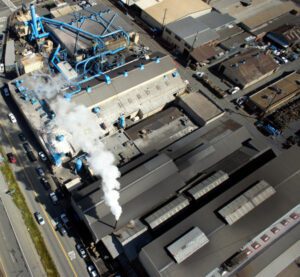
photo courtesy Michael Layefsky
ELJC is staffed by two faculty attorneys, two graduate fellows who are lawyers with degrees from GGU Law, and our student clinicians. ELJC clinicians are certified under State Bar of California rules to perform many of the tasks of an attorney. Under close faculty supervision, they interview and counsel clients, develop legal strategies, draft legal documents, appear at hearings, and negotiate with opposing parties.
THE CLINIC & ENVIRONMENTAL JUSTICE
The San Francisco Bay Area has numerous densely urbanized zones that are hot spots of industrial activity and traffic. People who live or work closer to these places are likely to be exposed to higher levels of air, water, and other forms of pollution and thus bear a higher burden of environmental health risk than the population in general. Environmental injustice exists because underprivileged people — people of color and those in lower economic categories — are more likely to live and work near urban pollution hot spots.
In recent years, the presence of environmental inequity has been confirmed by many studies. Evidence is also emerging that people living in highly impacted areas become more sensitive to environmental pollution: resistance to disease may be undermined by the cumulative effect of a series of adverse conditions, including pollution, noise, and socio-psychological stress. Global climate change is another source of environmental inequity. For example, global warming will exacerbate heat waves and raise air pollution levels in some of our large urban centers, where most underprivileged people live.
Over the last two decades, numerous Bay Area community and environmental organizations have focused on the problem of inequitable pollution exposure. The goals of these groups include eliminating environmental discrimination, reducing cumulative environmental health risks, establishing health-protective regulations and ensuring their strict enforcement, and having a voice in industrial permit proceedings.
ELJC offers services to environmental justice advocates so that they may work more effectively in a political environment that is frequently indifferent and sometimes inhospitable to these objectives. We help community advocates to engage with different government agencies, from the local and state, to the national levels. We are a free resource for groups who want to challenge polluting industries, so that they pay attention to public health and not just profits.
After several decades of organizing, environmental justice advocates have convinced government agencies — at both the state and federal level — to craft a variety of environmental justice plans and policies. Today, the movement for environmental justice is in a new and perhaps more difficult phase. It is now time for policy suggestions to be incorporated concretely into environmental regulation and decision making. This step will require significant political organizing and a more technically sophisticated environmental justice movement.
SUPPORT FOR NEIGHBORHOODS WITH POLLUTION PROBLEMS
A large part of our work consists of providing legal services to communities facing a variety of environmental pollution problems, such as toxic air emissions from power plants and manufacturing facilities. Matters that we normally handle include: enforcement of federal and state pollution laws, participation in permit proceedings, and challenges to environmental rule making or the siting of hazardous facilities. Our staff scientist provides technical assistance to our legal staff on these cases as well as other Clinic projects. The Clinic also advises clients on options to solve problems without bringing a lawsuit. We do not represent clients who are having disputes with neighbors or seeking money damages.
WORKING FOR NEW POLICIES TO REDUCE POLLUTION
ELJC works in collaboration with environmental advocates to strengthen regional and national environmental policies to protect public health and the environment.
HONORS
The Clinic’s work on behalf of environmental justice communities and in the field of clinical legal education has been recognized locally and nationally:
- The Clinic received the 2013 Dedication to Diversity and Justice Award from the American Bar Association’s Section of Environment, Energy, and Resources. The award recognizes and honors the accomplishments of leading organizations in the areas of environmental justice and those who embrace a commitment to gender, racial, and ethnic diversity in the areas of environment, energy, and natural resources. The Clinic received the award for its achievements in significantly reducing pollution in numerous underrepresented communities living amidst manufacturing and power plants.
- In 2009, the US EPA Region 9 presented ELJC with an “Environmental Award for Outstanding Achievement.”
- In 2009, we received a $300,000 cy pres award from the law firm of Saveri & Saveri, Inc. as part of the California Smokeless Tobacco Antitrust Settlement.
- In 2006, the Clinical Legal Education Association gave its “Award for Excellence in a Public Interest Case or Project” to the Clinic for our work on the Southeast San Francisco Energy Project. The award recognizes projects that “significantly redress a high-priority need of a low-income community.”
- In 2004, San Francisco County recognized the Clinic for its work in protecting the environment.
- In 2000, Environment Now gave former Clinic Director Alan Ramo the “Wells Family Award” for his work on urban environmental issues.
- On Earth Day 1999, the US Environmental Protection Agency honored the Clinic along with one other San Francisco public interest organization for our work in protecting the environment.
- In 1998, the Clinic was one of three university presenters at a plenary meeting of the American Association of Law Schools’ workshop on “New Strategies for Inner Cities: Academics, Professionals and Communities in Partnership.”
- In 1997, the San Francisco Board of Supervisors commended the Clinic’s work with the Bayview-Hunters Point community.
- In 1995, the American Bar Association’s Section on Natural Resources, Environmental and Energy Law gave the Clinic an award for our work in Bayview-Hunters Point.
ORGANIZATION |
DESCRIPTION |
| Bay Area Environmental Health Collaborative (BAEHC) www.baehc.org |
BAEHC is a partnership of six environmental health coalitions, with more than 20 organizations, working to reduce air pollution in heavily impacted communities of the San Francisco Bay Area. The Collaborative’s membership includes community-based organizations, environmental health and justice advocacy groups, and public health experts. |
| Bayview Hunters Point Community Advocates | BVHPCA works for environmental justice in the Bayview Hunters Point neighborhood of San Francisco and to promote environmentally and occupationally safe economic development. |
| California Environmental Justice Alliance (CEJA) http://caleja.org |
CEJA is a statewide coalition of grassroots, environmental justice organizations. It seeks to achieve environmental justice by organizing in low-income communities and communities of color and by pushing for policies at the federal, state, regional, and local levels that protect public health and the environment. |
| Citizens Against Pollution (CAP) | CAP is a community group in Hayward, CA that educates citizens about the toxic exposure and other hazards of local fossil-fuel power plants, as well as the benefits of clean energy alternatives. |
| Californians for Alternatives to Toxics (CATs) www.alternatives2toxics.org |
CATs is a Northern California center for information and action, helping the public to gain control over pesticides and other toxic chemicals within the environment. |
| Center for Biological Diversity (CBD) www.biologicaldiversity.org |
CBD uses science, law, and creative media to secure a future for all species hovering on the brink of extinction. |
| Chinese Progressive Association (CPA) www.cpasf.org |
CPA is a social justice organization working in the Chinese community of San Francisco to promote justice and equality for all people. CPA is one of the lead organizations in the Bay Area Environmental Health Collaborative (BAEHC). |
| Communities for a Better Environment (CBE) www.cbecal.org |
CBE is a statewide organization working with local communities to achieve environmental justice. The Clinic frequently teams with CBE’s lawyers and has represented CBE in many matters. |
| Environmental Justice Coalition for Water | The Coalition is building a community-based movement to advocate for clean, safe, and affordable water in California. |
| Friends of the Earth (FOE) | FOE pushes for reforms that are needed, not merely the ones that are politically easy. It is a member of the Friends of Earth International, a global network representing more than two million activists in 76 different countries. |
| Greenaction for Health and Environmental Justice | Greenaction is a multiracial grassroots organization that fights for health and environmental justice together with low-income and working class urban, rural, and indigenous communities. |
| Greenpeace, Inc. www.greenpeace.org/usa/en/ |
Greenpeace is the largest independent direct-action environmental organization in the world. It does not take money from government or corporations. |
| Helphinkley.org | Helphinkley.org is a community group whose primary interest is in protecting the residents of Hinkley, CA from environmental health hazards. |
| Just Transitions Coalition | Just Transitions Coalition is composed of the Indigenous Environmental Network, To’ Nizhoni Ani, Grand Canyon Trust, and the Sierra Club. The coalition is working for renewable energy development to benefit California energy consumers and the Hopi and Navajo communities adversely affected by the closure of the Mohave Generating Station in Nevada. |
| Monterey Coastkeeper | Monterey Coastkeeper is dedicated to protecting and restoring waters so that they are drinkable, swimmable, and fishable. |
| No Coal in Oakland | No Coal in Oakland is a volunteer organization with no staff. Working with allies, it successfully campaigned to stop the development of a coal terminal at the former Oakland Army Base. |
| Pacific Environment www.pacificenvironment.org |
Pacific Environment protects the living environment of the Pacific Rim by promoting grassroots activism, strengthening communities and reforming international policies. |
| People Organizing to Demand Environmental and Economic Rights (PODER) www.podersf.org |
PODER works for social, economic, and environmental justice by organizing low income communities and communities of color in San Francisco. PODER is one of the lead organizations in the Bay Area Environmental Health Collaborative (BAEHC). |
| San Francisco Baykeeper www.sfbaykeeper.org |
Baykeeper works to protect and restore San Francisco Bay waters through advocacy, policy campaigns, and direct enforcement of California’s water protection laws. |
CLIENT / AFFECTED AREA |
ASSISTANCE WE PROVIDED |
|
2014 – Current |
See our Fall Reports for a list of our latest cases and projects. | |
2011 – 2013 |
Bay Area Environmental Health Collaborative (BAEHC) San Francisco Bay Area |
Technical, policy, and administrative assistance to the Collaborative in its campaign to reduce the cumulative impacts of air pollution the the Bay Area; ongoing since 2005. |
| California Environmental Justice Alliance California |
Rulemaking litigation before the California Public Utilities Commission to advocate for California’s transition to clean energy. | |
| California Environmental Justice Alliance for Water California |
Legal counseling and representation concerning nitrate pollution of drinking water in the Salinas Valley and collaboration on low quality drinking water in other areas of California. | |
| Californians for Alternatives to Toxics (CATs) Eureka, CA |
Litigation to compel the North Coast Railway Authority to do proper environmental review of a rail line project. | |
| Friends of the Earth U.S. |
Prepared case against the U.S. Environmental Protection Agency to determine whether lead in aviation gasoline is a significant environmental hazard | |
| Greenpeace and Port Townsend Airwatchers U.S. |
Compelled EPA to review the New Source Performance Standards for kraft pulp mills (with the Center for Biological Diversity). | |
| West Berkeley Alliance for Clean Air and Safe Jobs Berkeley, CA |
Legal counseling, regulatory analysis, and scientific assessment of air pollution from Pacific Steel Company; ongoing since 2005. | |
2011 |
Pacific Environment California |
Counsel in California Public Utilities Commission proceedings to encourage the development of renewable energy resources; ongoing since 2010. |
| Helphinkley.org & Center for Biological Diversity (CBD) San Bernardino County |
Successful litigation to overturn the County’s approval of an open-air, human-waste and plant compost facility in Hinkley, CA. (Hinkley is a rural town with a sizeable Latino community.) | |
| Youth United for Community Action East Palo Alto, CA |
Technical assistance to group regarding the cleanup of a hazardous waste site bordering the Bay. | |
| Californians for Alternatives to Toxics (CATs) Eureka, CA |
Litigation to compel the North Coast Railway Authority to do proper environmental review of a rail line project | |
2010 |
Bay Area Environmental Health Collaborative (BAEHC) San Francisco Bay Area |
Technical, policy, and administrative assistance to the Collaborative in its campaign to reduce the cumulative impacts of air pollution the the Bay Area; ongoing since 2005. |
| Helphinkley.org and Center for Biological Diversity (CBD) San Bernardino County |
Successful litigation to overturn the County’s approval of an open-air, human-waste and plant compost facility in Hinkley, CA. (Hinkley is a rural town with a sizeable Latino community.) | |
| Communities for a Better Environment (CBE) Contra Costa County |
Litigation in federal court to overturn Clean Air Act consent decree between US and PG&E affecting Pittsburg-Antioch communities, and to ensure air district accountability in permitting. | |
| Citizens Against Pollution Hayward, CA |
Counsel in Environmental Appeals Board proceedings involving a proposed power plant in Hayward, California. | |
| Pacific Environment San Francisco Bay Area |
Litigated in the California Energy Commission and Public Utilities Commission to encourage development of renewable energy; blocked a fossil-fuel power plant in Pittsburg-Antioch area based on lack of need. | |
2009 |
East Bay Environmental Justice Collaborative Northern Contra Costa County |
Environmental data analysis and GIS mapping of pollution sources in Pittsburg and Antioch, CA. |
| ACORN Antioch, CA |
Filed complaint and provided other legal assistance related to a proposed power plant, resulting in a fine against PG&E. | |
| Bayview Hunters Point Community Advocates San Francisco, CA |
Compelled the City of San Francisco to subject a large biodiesel facility to CEQA environmental review. | |
| Citizens Against Pollution Hayward, CA |
Review of power plant permit documents and assistance with public participation in the permit process. | |
| West Berkeley Alliance for Clean Air and Safe Jobs West Berkeley, CA |
Legal counseling, regulatory analysis, and scientific assessment of air pollution from Pacific Steel Company; project begun in 2005. | |
| West Valley Citizen’s Air Watch Cupertino, CA |
Helped group participate in permit process; analysed federal pollution rules governing the Lehigh Southwest Cement Company. | |
| West Oakland Residents Oakland, CA |
Worked with local residents and a concerned city council member to evaluate and reduce air and noise pollution from a local aluminum recycling facility. | |
2008 |
A Hayward Resident Hayward, CA |
Helped a concerned resident to change the way the air district notifies and involves the public regarding power plant permits; obtained a remand allowing significant public participation in permit proceedings. |
| Bayview Hunters Point Community Advocates & Our Children’s Earth San Francisco, CA |
Compelled Muni to comply with Proposition I, replacing old diesel buses with cleaner modes of transportation. | |
| Midway Village Residents Relocation Committee Daly City, CA |
Provided scientific and legal counseling regarding residential soil contamination issues at a housing complex. | |
| Bayview Hunters Point Community Advocates & Communities for a Better Environment San Francisco Bay Area and beyond |
Provided comments to EPA regarding environmental justice impacts of greenhouse gas regulations. | |
| Climate Scientists James Hansen, Mark Jacobson, Michael Kleeman, Benjamin Santer, and Stephen Schneider California and beyond |
Prepared amicus brief supporting California’s effort to regulate greenhouse gases from motor vehicles. | |
| Just Transitions California, Arizona |
Represented environmental and grassroots groups from the Navajo Nation and the Hopi Tribe before the Public Utilities Commission to advocate for a just distribution of acid rain credit proceeds (case pending). | |
| Friends of the Earth California & Beyond |
Petitioned the U.S. Environmental Protection Agency to determine whether lead in aviation gasoline is a significant environmental hazard. | |
| Karuk Tribe Klamath region |
Counseled the Karuk Tribe on regulatory issues relating to the Klamath Dams. | |
2007 |
Californians for Alternatives to Toxics (CATs) & Environmental Protection Information Center (EPIC) Eureka, CA |
Reduced air pollution from a large paper mill through a Clean Air Act complaint and settlement, improving pollution controls for particulate matter. |
| Communities for a Better Environment West Berkeley, CA |
Compelled Pacific Steel Company to reduce odoriferous and hazardous air pollutants at its foundry through a Clean Air Act lawsuit and settlement. | |
2006 |
Bayview Hunters Point Community Advocates & Southeast Alliance for Environmental Justice San Francisco Bay Area |
Culmination of ELJC’s 12-year power plant campaign, alongside our community partners: final shutdown of the Hunters Point Power Plant and California Energy Commission rejection of Mirant’s expansion proposal. |
| Youth United for Community Action East Palo Alto, CA |
Prepared formal public comments and an expert opinion on a CEQA Environmental Impact Report for Romic Environmental Technologies, a hazardous waste processing facility located in the community. | |
| Coalition of University Employees & Union of Professional and Technical Employees Richmond, CA |
Provided legal counseling and environmental science consulting to University of California employees working at a university location contaminated with hazardous wastes. | |
2005 & PRIOR |
Our Children’s Earth Martinez & Benicia, CA |
Improved air pollution permits for two oil refineries by providing detailed comments to the local air district and to U.S. EPA and filing petitions with EPA. |
| Grand Canyon Trust Colorado Plateau |
Helped make Ninth Circuit law that facilitates enforcement of continuing, difficult-to-discover violations; the case resulted in thousands of tons of pollution reductions. | |
| Southeast Alliance for Environmental Justice Southeast San Francisco |
Obtained cleanup funds for a power plant with contaminated soils before the California Public Utilities Commission. | |
| Grassroots & Environmental Groups California |
Provided a day-long Clean Air Act training seminar for community advocates. | |
| Environmental Justice Groups Nation |
Held a roundtable discussion between activists and government agencies on the Clean Air Act and environmental justice to identify next steps. | |
| Chester Street Block Club Association West Oakland |
Reduced odor and toxic air pollution from yeast factory through the Clean Air Act. | |
| Our Children’s Earth Nationwide |
Made an important air pollution regulation (the State Implementation Plan) publicly available on the web through a Clean Air Act lawsuit against U.S. EPA. | |
| Clean Water Alliance & San Francisco BayKeeper San Francisco |
Made environmental documents for a proposed airport expansion publicly available, through enforcement of the San Francisco Sunshine Ordinance. | |
| Our Children’s Earth Central California |
Stopped a plan to exempt major agricultural air pollution sources from federal regulation through a Clean Air Act lawsuit. | |
| Bayview Hunters Point Community Advocates Southeast San Francisco |
Prevented power plant expansion and accompanying air pollution through participation in California Energy Commission proceedings. | |
| Environmental Justice Air Quality Coalition & Our Children’s Earth San Francisco Bay Area |
Improved the air pollution permits and the permitting process for large industrial facilities through informal negotiations and a writ proceeding. | |
| Coalition for Healthy Communities & Environmental Justice East Oakland |
Helped the coalition shut down a medical waste incinerator through legal counseling about Title V operating permit procedures. | |
| Bayview Hunters Point Community Advocates Southeast San Francisco |
Stopped pollution from the Potrero Power Plant and negotiated a $105,000 settlement for community environmental projects by enforcing the Clean Air Act. | |
| Our Children’s Earth San Francisco Bay Area |
Publicized information on thousands of unresolved air pollution citations given to Bay Area companies, spurring enforcement by the local regulatory agency. | |
| Southeast Alliance for Environmental Justice & Our Children’s Earth San Francisco Bay Area |
Exposed and fixed a gap in regional emissions banking program through, among other things, a CEQA complaint against the Bay Area Air Quality Management District. | |
| Communities for a Better Environment San Francisco Bay Area |
Compelled EPA to require more stringent ozone pollution planning in the Bay Area through a Clean Air Act complaint. | |
| Tri-Valley CARES, Western States Legal Foundation & Physicians for Social Responsibility Livermore, CA |
Reduced the risks of a hazardous waste storage facility at Lawrence Livermore National Laboratory through a CEQA complaint and settlement. | |
| Southeast Alliance for Environmental Justice San Francisco |
Monitored remedial action plans for a California State Superfund site; Public comment under California Hazardous Waste Law. | |
| San Francisco Bay Keeper Southeast San Francisco |
Prohibited toxic pollution from a Navy shipyard through a negotiated Clean Water Act consent decree. | |
| Chester Street Block Club Association West Oakland |
Protected communities from contamination during a hazardous site cleanup through a federal Civil Rights Act petition. | |
| Midway Village residents Brisbane, CA |
Obtained additional environmental testing and protections during toxic waste site operations through a federal Civil Rights Act petition. | |
| Southeast Alliance for Environmental Justice Southeast San Francisco |
Obtained plan to shut down a Hunters Point power plant through a California PUC administrative proceeding | |
| West Oakland Neighbors West Oakland |
Reduced air pollution from Port operations by enforcing CEQA/Civil Rights Act. | |
| Oceanview Neighborhood Association West Berkeley |
Reduced air emissions from an asphalt plant through a CEQA administrative proceeding. | |
| Communities for a Better Environment Southern California |
Lowered emissions from petroleum refinery marine loading terminals through the Clean Air Act. | |
| Southeast Alliance for Environmental Justice Southeast San Francisco |
Reduced pollution from a concrete crushing plant using CEQA. | |
| Alviso Community in Action San Jose, CA |
Obtained additional pollution controls for a waste-site expansion project using CEQA and federal Civil Rights Act administrative proceedings. | |
| Friends of the Earth Southern California |
Assisted groups with wetlands restoration and monitored consent decree obligations of Southern California Edison. | |
| SF Bay Keeper San Francisco |
Prevented water pollution from former Navy Base on Treasure Island using the Clean Water Act. | |
| Various community activists Southeast San Francisco |
Held a lead-hazard training session for tenants and landlords. | |
| San Francisco BayKeeper & District 7 Democratic Club Southeast San Francisco |
Prevented water pollution from Hunters Point Shipyard by enforcing the Clean Water Act. | |
| Morgan Heights Homeowners Association Southeast San Francisco |
Stopped a new power plant in the community through a California PUC administrative proceeding. | |
| Various community groups Northern and Southern California |
Training and education on lead-based paint hazards in residential housing. | |
| Citizens for a Healthy Ukiah Mendocino County, CA |
Required review of an air pollution permit and the adequacy of pollution controls used by a forest products company through an appeal to EPA Environmental Appeals Board. | |
| Communities for a Better Environment & Residents West Contra Costa County |
Counseled low-income West Contra Costa County community who successfully negotiated a multi-million dollar “Good Neighbor Agreement” with two local petroleum refineries. | |
If you are a former client and would like access to your client file, please contact Golden Gate University at info@ggu.edu or (415) 442-7000.
A Chapter Published in the Oxford Handbook of Climate Action
Caroline Farrell, former Director of the Environmental Law and Justice Clinic, co-authored with Ingrid Brostrom of UC Merced’s Community and Labor Center a chapter published in the Oxford Handbook of Climate Action.
They worked together at the Center on Race, Poverty & the Environment and the chapter chronicles the story of how residents in one of the most overburdened communities in the state banned oil and gas drilling near homes and schools in Arvin and demonstrated how community organizing, cross-sectoral coalition building, legal strategy, and policy advocacy can work synergistically to create meaningful change. The lessons learned from the struggle to establish oil and gas health and safety setback zones can be applied to the continued fight for climate justice.
California Supreme Court Rejects Deference to Regulators on Rooftop Solar Rollback
The Environmental Law and Justice Clinic (ELJC) received some good news in a case in which it filed an Amici Curiae Brief to the California Supreme Court. In December, the ELCJ filed on behalf of 12 climate justice, energy justice and transportation justice groups in support of Petitioners, the Center on Biological Diversity, the Environmental Working Group, and Protect our Communities Foundation challenge on the California Public Utilities Commission’s decision on Net Metering 3.0 which has stalled the growth of rooftop solar in California, particularly in underserved communities. The Supreme Court issued a decision in favor of Petitioners sending the case back to the Appeals Court to properly review the basis for the PUC’s Decision. The Petitioner’s Press Release summarizes the issues in the case and Supreme Court’s decision.
SAN FRANCISCO— In a victory for renewable energy, the California Supreme Court ruled today that an appeals court should not have deferred to state utility regulators who decided the latest rooftop solar policy complies with state law. The updated policy slashed the credit new solar users get for sharing excess energy with the grid.
Today’s decision sends the case back to the state Court of Appeal to consider whether the California Public Utilities Commission’s policy is unlawfully harming rooftop solar growth, especially in disadvantaged communities.
“I’m relieved to see the state’s highest court rein in this runaway commission, which is putting corporate utilities ahead of Californians’ pocketbooks, the climate and the law,” said Roger Lin, a senior attorney at the Center for Biological Diversity. “Commissioners are hobbling the renewable energy transition by mischaracterizing critical opportunities for local power generation and conservation. This is outrageous when so many people are struggling to pay their electric bills. I hope this ruling prompts regulators to craft a new rooftop solar policy that’s in the public interest rather than padding fossil fuel utility profits.”
In today’s ruling, the high court agreed that the appeals court had overlooked the California Legislature’s 1998 direction to limit deference to regulators, rejecting arguments from the utility commission and the three large investor-owned utility companies in California — Pacific Gas and Electric Company, Southern California Edison and San Diego Gas and Electric Company.
The commission’s updated net-metering policy, which took effect in April 2023, slashes customer credits by up to 80% for electricity generated on rooftops and sold back to the grid, reducing the financial benefit of installing solar systems. In 2022 the Center for Biological Diversity, The Protect Our Communities Foundation and the Environmental Working Group challenged the state’s new policy.
The policy has stalled efforts to expand rooftop solar in California and led to huge layoffs in the solar industry. It also violated state law, which requires that the commission ensures the rooftop solar market keeps growing, particularly in low-income communities and those of color.
“California needs a large, thriving rooftop solar market to meet its clean energy goals,” said Bernadette Del Chiaro, senior vice president for California with Environmental Working Group. “The market is currently being stifled by the CPUC’s misguided NEM 3 decision threatening to undermine not only consumer choice and grid stability but also the state’s ambitious clean energy goals. We look forward to spotlighting just how illegal and out of step with California the CPUC has become.”
“The CPUC focused exclusively on reducing demand on the utilities’ system and refused to consider the benefits of customer-provided electricity for the resiliency of the electrical system as a whole, and the ability to quickly and affordably provide the electricity to support electric vehicles, HVAC systems, and other beneficial uses of electricity on site,” said Malinda Dickenson, legal and executive director of The Protect Our Communities Foundation, who argued the case before the Supreme Court. “The Legislature has been clear that customer-generator’s rooftop solar facilities benefit ratepayers and California’s electrical system and must be accounted for.”
The Court of Appeal will rehear the case to determine whether the commission had any legal basis to make the cuts to rooftop solar and whether the commission designed a policy that will keep rooftop solar growing in environmental justice communities, as state law requires.
The Center for Biological Diversity is a national, nonprofit conservation organization with more than 1.8 million members and online activists dedicated to the protection of endangered species and wild places.
The Protect Our Communities Foundation is a San Diego-based ratepayer advocacy organization with a mission to maximize clean, local, affordable, and equitable energy solutions through education, community engagement, and legal action.
The Environmental Working Group is a nonprofit, nonpartisan organization that empowers people to live healthier lives in a healthier environment. Through research, advocacy and unique education tools, EWG drives consumer choice and civic action.
Pesticide Use and Civil Rights in Central California: Slow Violence and the State
The article shares findings from the People’s Tribunal on Pesticide Use that was held last year in Lindsay, California. It applies a “slow violence” lens to the Civil Rights issues raised by farmworker experiences with pesticide use and reporting. Caroline Farrell, the Environmental Law and Justice Clinic Director, contributed to this Joint Report on the injustice of pesticide use in California. Read the article here.
ELJC Director and Clinic Students Contributed to the People’s Tribunal on Pesticides and Civil Rights Advisory Opinion
On February 15, 2024, the People’s Tribunal on Pesticides and Civil Rights issued its Advisory Opinion. Read more about the Advisory Opinion. Caroline Farrell, Director of the Environmental Law and Justice Clinic, was one of the judges for the Tribunal and the Clinicians Ariana Salcedo, Brandon Turner, and Jessica Reardon contributed to the Advisory Opinion in collaboration with the Center on Land, Environment, and Natural Resources at UC Irvine School of Law. The Tribunal found widespread and systemic violations of the civil rights of farm working communities in California, whose residents are predominantly Latino and Indigenous.
EPA’s Proposal to Find Endangerment for Lead Emissions from Aircraft Had Its Genesis in the Clinic’s Request to EPA
On October 7, 2022, EPA proposed to make a finding that lead from certain aircraft endangers public health. If EPA ultimately makes this finding, it would be the first step to phase out lead from leaded aviation gasoline. Leaded gasoline is used in piston-engine aircraft. The clinic first asked EPA to review the issue in 2003 and filed a petition in 2006. The work was done on behalf of Friends of the Earth (formerly Bluewater Network). The clinic also sued EPA to compel EPA to respond to the petition and not to delay making an endangerment finding. Although unsuccessful, this litigation laid the partial groundwater for a later petition that ultimately was successful.
Clinic Director’s Recent Work
Professor Helen Kang, the Director of the Clinic, wrote in June 2022 about how the U.S. Attorneys’ Offices throughout our nation could take a meaningful role in enhancing environmental justice. The US DOJ’s recent comprehensive environmental justice enforcement strategy, which involves US Attorneys’ Offices, could be successful with proper planning, communication with communities most impacted by pollution, and provision of funding and expertise. The US DOJ’s recent comprehensive environmental justice enforcement strategy, which involves US Attorneys’ Offices, could be successful with proper planning, communication with communities most impacted by pollution, and provision of funding and expertise.
A group of environmental law professors, including Professor Helen Kang, the Director of the Clinic, published transcripts and analysis stemming from the Emerging Environmental Law Curriculum Workshops held at Vermont Law School in winter 2021. These workshops gather the collective knowledge of this community of environmental law professors to enhance teaching in this field to best mirror the realities of environmental law practice today. Professor Kang’s co-authored piece is on preparing law students for environmental practice.
Some Highlights of the Clinic’s Current and Recent Work
Assisting organization of a coalition of frontline environmental justice groups in the Bay Area to advocate for more protective air pollution controls in disadvantaged communities: In December 2021, the Bay Area Air Quality Management District passed the first regulation in the entire country that sets stricter standards for pollution sources in disadvantaged communities (particularly for toxic pollution).
Representation of a low-income community of color fighting the City of Fresno’s plans to inundate the neighborhood (which has traditionally been rural) with mega-Amazon warehouses and other polluting sources: See story here.
Helping to draft and defend major environmental justice legislation (Senate Bill 499) which, if enacted, would prohibit polluting sources in low-income neighborhoods and communities of color: See the bill here.
Representation of one of our long-term clients, a neighborhood group in Bayview/Candlestick Heights, in fighting the City of San Francisco’s decision to site a project on the Candlestick State Park, the only greenspace the community has access to. The lawsuit was filed in November 2021.
Representation of a broad coalition of environmental and fishing groups, including many coastkeeper organizations, in seeking clean water: Our clinic’s Graduate Fellow, Su Bradford, argued before the California Court of Appeal on January 18, 2022, challenging the water boards’ illegal policy in failing to implement the laws they are in charge of to stem water pollution from irrigated agriculture.
ELJC Students and Professors File an Appellate Brief Arguing that Claims for Declaratory and Mandate Relief Should Be Actionable for the Water Board’s Abdication of Duty
On August 14, 2020, the Clinic filed a brief with the Third Appellate District in the Court of Appeal in the State of California, arguing that claims alleging that the State water board violated its own regulations in issuing permits governing are actionable under state law. These permits govern more than a million acres of cropland. On behalf of a diverse coalition of clients, the Clinic documents in the brief that polluted runoff from irrigated agricultural operations harms human and ecological health in the Central Valley and Central Coast regions. The water in these regions is so polluted that some communities are under “do not drink” orders – that is, residents must purchase water for domestic uses. The brief the Clinic filed was primarily researched and drafted by GGU law students, Susann Bradford, Tanner Wright, and Brea Violette. The clients are Monterey Coastkeeper, a program of The Otter Project, California Sportsfishing Protection Alliance, Environmental Justice Coalition for Water, Pacific Coast Federation of Fisherman’s Associations, Institute for Fisheries Resources, California Coastkeeper Alliance, Santa Barbara Channelkeeper, Orange County Coastkeeper, and Inland Empire Waterkeeper.
New Response from US EPA About the Hunters Point Naval Shipyard Contamination
On April 9, 2020, EPA responded to a December 2019 letter our clinic wrote on behalf of Greenaction for Health and Environmental Justice. The clinic had written EPA because Greenaction remained concerned about some aspects of EPA’s review of the Navy’s proposed reevaluation of soil remedial goals for cleanup of radiological waste at the Shipyard site. In EPA’s latest letter, the agency agreed with the clinic that the retesting methods for radionuclides at the Shipyard must include appropriate detection limits. EPA also agreed with the clinic that the Navy’s publicstatement – that the remedy is protective – does not address concerns from EPA and the public about the remediation goals for the Shipyard. In response to our comments that the Navy should consider risks to future residents from eating homegrown produce from backyard gardens at planned developments at the Shipyard, EPA stated that the California Department of Toxic Substances Control intends to impose controls that’ll allow the growing of produce only if it is done in concrete-bottomed planters. Regarding our comments that the Navy’s remediation goal for radium-226 was adopted without any supporting analysis and is not protective, EPA stated that it’s deferring a decision on long-term protectiveness until the Navy has completed retesting. At that time, health risks can be assessed. EPA acknowledged that the most important consideration is whether the remediation goal for radium-226 adopted 14 years ago is protective of human health.
Clinic Director Honored with an Award
Professor Helen Kang was honored as the 2020 recipient of the Svitlana Kravchenko Environmental Rights Award from the students of Land Air Water of the University of Oregon School of Law. The award is presented to a person who exemplifies the ideals and work of Professor Kravchenko whose work was enormously successful but unfinished. The award winner is chosen from those who carry on in Professor Kravchenko’s spirit: having exquisite qualities of both head and heart; mixing academic rigor with spirited activism; and speaking truth to power, while exhibiting kindness toward all. The award winner insists that environmental rights and human rights are indivisible, as did Svitlana Kravchenko, a daughter of Ukraine who became a citizen of America and the entire world. The award is given normally at the Public Interest Environmental Law Conference, one of the largest gatherings of environmentalists worldwide. This year, the conference was canceled because of Coronavirus. Next year’s ceremony will, however, include Helen as well.
Victory for Communities Affected by Agricultural Pollution
On September 18, 2018, the Third Appellate District of the California Court of Appeals issued a decision affirming in large part our trial court victory in a case of far-reaching importance to drinking water in California. The decision is the first of its kind from an appellate court to rule that permits issued to agricultural operators must demonstrate a “high likelihood” of achieving clean water standards. For over forty years, the state has taken a soft approach to regulating the powerful agricultural industry — relying primarily on education, voluntary adoption by farmers of pollution reduction measures, and encouraging farmers to do “better” if water quality doesn’t improve. This approach has clearly failed but the state was not about to comply with its own laws without this litigation.
While we think of Flint, Michigan as a faraway tragedy, our own has been brewing right here in the richest state in the richest country in the world: drinking water is seriously degraded as 360,000 tons of nitrates leach into California groundwater annually and nearly 200 million pounds of pesticides are applied to California farms. Hundreds of thousands of residents, mostly Latinos, lack safe drinking water; by 2050, 80 percent of residents in certain rural areas are expected to have no access to safe drinking water, except through purchasing bottled water.
Over the last six years that our clinic has been representing a broad coalition of environmental justice, conservation, and fishing groups with co-counsel, numerous students spent hours drafting briefs and poring through technical documents. In this last round, Tyler Sullivan, then in his third semester of the clinic, worked on the appellate brief. The clinic’s clients included Ms. Anonia Manzo, an elderly resident of a farming community whose tap water is too contaminated to drink, Environmental Justice Coalition for Water, Monterey Coastkeeper, California Sportsfishing Protection Alliance, Pacific Coast Federation of Fishermen’s Association, and Santa Barbara Channelkeeper.
Sworn Declarations of Whistleblowers Obtained by Clinic Students Lead to Reexamination of Radiological Cleanup
After the Clinic filed a petition on behalf of Greenaction for Health & Environmental Justice with the Nuclear Regulatory Commission and pushed the Navy for acknowledgment of widespread fraud that casts serious doubt on the integrity of the Hunters Point Shipyard cleanup, the Navy finally agrees with us: the radioactive contamination is much worse than the Navy claimed and widespread resampling will have to be done to determine its full extent. This acknowledgment never would have come without dogged work by Professor Steve Castleman of our Clinic and our students. Read the story in the Chronicle. Professor Castleman says in the article, “Some of the alleged fraud by Tetra Tech was uncovered by students at Golden Gate University’s Environmental Law and Justice Clinic. Attorney Steven Castleman, who worked with the students, said it was ironic that a handful of law students was able to discover irregularities in one semester that the Navy didn’t see in three years since the first Tetra Tech whistle-blowers came forwarded with allegations in 2014.” Watch NBC Bay Area Investigative Unit’s coverage mentioning Anthony Smith’s declaration, which was drafted by our students under faculty supervision.
ELJC’s Professor Helen Kang featured in the Clinical Law Prof Blog
The Clinical Law Prof Blog chose to interview Professor Kang for this semester’s edition of their 5 Questions feature. In the interview which you can read in full here Kang speaks, among other things, about the work and achievements of the ELJC.
ELJC Wins California Supreme Court Case and, as Amicus Counsel, Provides a Winning Argument in a Related Case
The California Supreme Court ruled in July in favor of the Clinic’s client, Californians for Alternatives to Toxics, in a landmark case holding that federal law governing railroad transportation does not preempt a public agency’s obligations under the California Environmental Quality Act. This victory is the culmination of over five years of work by clinic students and staff in conjunction with co-counsel, including private attorneys and the Stanford Environmental Clinic. Professor Helen Kang argued the case with another lawyer representing a separate petitioner, Friends of the Eel River, under whose name the case was published. See Friends of the Eel River v. North Coast Railroad Authority, No. 222472 (Cal. Jul. 27, 2017). Last semester’s clinic students, led by Matthew Tyler Sullivan, assisted Professor Kang in refining her oral arguments by acting as “justices” in a moot court. Numerous students, including Nico Smith, Shanda Fisher, and Catherine Dickstein, to name just a few, worked on the case.
In another case, the Clinic served as counsel for Center for Biological Diversity to provide a friend-of-the-court brief, arguing that the Ninth Circuit Court of Appeals lacked jurisdiction to hear a challenge to a declaratory order from a federal agency, the Surface Transportation Board. But for its lack of jurisdiction, the court was poised to decide the very same legal issue presented in the California Supreme Court case. Our brief, drafted with the Stanford Environmental Clinic, was the only brief that raised the jurisdiction issue.
On behalf of a community-based group, Clinic Files NRC Petition to Redress Fraudulent Radioactive Cleanup at the Hunters Point Shipyard
In June, the Clinic filed a petition with the U.S. Nuclear Regulatory Commission on behalf of Greenaction for Health and Environmental Justice, seeking to revoke the radiological materials license of Tetra Tech EC, Inc. The company is the federal contractor responsible for cleaning up radioactive contamination at a former shipyard in Hunters Point, in San Francisco. The allegations cover false sampling, in which thousands of soil samples were reported to have been taken at one location when they were actually taken from another, and altering or discarding sample results when radioactivity was above acceptable limits. Students Pauline Balaire, Jordan Davis, Tai Yamanaka, and Chloe Yaw interviewed whistleblowers and helped prepare the declarations in support of the petition.
Greenaction Releases Report on Harmful Pollution from Under-Regulated Concrete Plants in Bayview Hunters Point and Beyond, Exposing Lax Government Oversight of Air Pollution
On behalf of Greenaction for Health and Environmental Justice, the Environmental Law and Justice Clinic at Golden Gate University School of Law today released a report, Concrete Manufacturers and the Regulatory Role of the Bay Area Air Quality Management District, detailing the results of an investigation into Bay Area concrete batching plants, compliance with their air pollution permits, and the air district’s failure to adequately regulate them. The report concludes that the Bay Area Air Quality Management District (BAAQMD) inspected these concrete facilities only sporadically and, when it discovered permit violations unearthed by law students, it failed to take adequate and timely enforcement action. The report also faulted BAAQMD’s system for responding to Public Records Act requests as far too slow and incomplete.
Read the full press release
Watch NBC Bay Area’s coverage
Professor Kang speaks at a conference on “Collapse.”
In September 2015, Professor Kang was also selected to participate in a small interdisciplinary conference funded by the Swiss National Science Foundation, the University of Zurich, and Franklin University Switzerland, where she gave a talk, “How Marginalized Communities Contribute to Correcting the Myopia of Environmental Regulation.”
Judge Orders Top State Water Agency to Better Control Agricultural Pollution
In August 2015, a Sacramento court issued a 44-page ruling, vindicating the rights of ELJC clients to cleaner water in the Central Coast. In Monterey Coastkeeper v. California State Water Resources Control Board, the court commanded the state to better regulate water pollution from irrigated farmland in the Central Coast of California. The decision affects a vast acreage — 435,000 acres and about 3,000 farm operations. The clients were jointly represented by the Clinic, the Stanford Environmental Clinic, and California Rural Legal Assistance. The state and an industry group recently appealed the decision.
Professor Kang serves as a consultant to the International Senior Lawyers Project
Professor Kang traveled to the Mindanao and Palawan Provinces of the Philippines, as a consultant with the International Senior Lawyers Project in summer of 2015. She advised developing clinical and environmental law programs based at two law schools in the southern parts of the archipelago. The region faces significant environmental and economic challenges.
Victory! Lennar Urban, the Second Largest Residential Developer in the Nation, Makes the Right Decision After Our Clients and ELJC Put the Law and Community Organizing to Work.
Our ELJC students worked tirelessly in the Fall 2014 semester to expose how Lennar Urban, LLC, and city agencies illegally approved a plan to demolish Candlestick Park Stadium using implosion. The illegal approval was made through a process that ensured that the Bayview Hunters-Point community would not find out about the health harms of the implosion. Implosions create enormous and harmful dust clouds that persist in the air and could disperse more than 10 miles. The Bayview Hunters-Point community already suffers from the highest rates in the city of asthma and other respiratory illnesses and ischemic heart disease — diseases that are aggravated by dust. Both the State of California and the Bay Area Air Quality Management District have recognized the social and health vulnerability of this particular community. Once ELJC exposed the illegal approval, residents mobilized, distributed flyers, and attended every hearing to have their voices heard. Under threat of legal appeals and because of the community’s organized responses to Lennar Urban’s ill-conceived plan, the company announced that it would withdraw its plan to implode the stadium.
Our clients received great local coverage, and the Clinic’s work was also recognized on the first page of The Chronicle in its 150th anniversary edition, featured on KTVU evening news, KGO radio, SF Curbed, and the Associated Press.
New Report by ELJC’s Professor Deborah Behles Calling for Reform at One of the Most Powerful State Agencies
A report issued on January 20 by Associate Professor Deborah Behles and Steven Weissman, a lecturer at U.C. Berkeley, calls for reform at the California Public Utilities Commission, which has an unusual way of doing business. While most state and federal regulatory agencies prohibit private, closed-door discussions with interested parties about contested matters, our state’s Public Utility Commission largely does not. In fact, most commissioners encourage private meetings in all but the most judicial, “adjudicatory” cases. Interested parties regularly communicate with decision-makers by phone and email, and socialize with those same decision-makers at conferences and retreats. These contacts “seriously compromise[] the integrity and the fairness of the process and the public’s right to have a meaningful say in the makeup of their electrical grid.” The report recommends prohibiting ex parte contacts in all contested proceedings.
Read Professor Deborah Behles’ editorials in The Sacramento Bee and The San Francisco Chronicle about the criticality of transparency in one of the most powerful agencies in the state, the Public Utilities Commission.
The Clinic Successfully Speaks Up for the Integrity of Pollution Trading
Under California’s cap and trade system for reducing greenhouse gases, the state sets a cap for the maximum amount of pollution that can be emitted from major industries, and each company receives an allowance to emit pollution. Those emitting less can sell the “credit” to other companies that find the credits cheaper than other means of reducing the pollution. The environmental justice community has been long concerned with the integrity of California’s cap and trade plan for reducing greenhouse gas emissions.
Recently, the Clinic represented the Environmental Defense Fund in exposing problems with credits issued to long-shuttered cotton gins and sugar beet processing plants in the San Joaquin Valley Air Pollution Control District. Over a million tons-worth of greenhouse gas credits were issued to companies that closed in the region for economic reasons and were listed on a “Greenhouse Gas Reduction Exchange,” a registry operated by the California Air Pollution Control Officers Association. The registry explains that it is “a trusted source of locally generated credits from projects within California” to facilitate trades, and that the credits are “designed specifically to benefit the state of California.”
The Clinic’s legal and factual research resulted in a letter to the California Air Pollution Control Officers Association advocating for “real” reductions. The letter was joined by NRDC, The Nature Conservancy, Sierra Club California, Union of Concerned Scientists, and Planning and Conservation League. In response to these efforts, the exchange instituted measures to ensure that credits are real and in fact result from efforts to reduce greenhouse gases rather than from economic closures.
A Petition Backed by 24,000 Citizens, Urging US EPA to Take Lead Out of AvGas
In April 2014, we submitted a petition for reconsideration to US EPA, along with signatures of over 24,000 concerned citizens urging EPA to find that lead emitted from aviation gasoline endangers human health. On January 27, 2015, EPA responded to our petition, stating that it was delaying making the initial endangerment determination until 2018. This delay is inexcusable. “EPA has known for decades that lead causes serious public health impacts,” according to Professor Deborah Behles who is quoted in a Law 360 article. We represent Friends of the Earth, Physicians for Social Responsibility, and Oregon Aviation Watch in this effort. This effort originated with the Clinic’s research and petition in 2006, and Earthjustice has since joined as co-counsel.
A Win for Now for Green Energy in Replacing Energy Generation from a Shuttered Nuclear Facility
Following an evidentiary hearing in which the Clinic represented the California Environmental Justice Alliance, the California Public Utility Commission issued its decision in March 2014. The Commission found that all of the energy generation from the shuttered San Onofre Nuclear Generating Station could be replaced with green measures such as energy conservation, efficiency, renewables, and storage. While some hailed the decision as unprecedented because it determined that all of the needs could be met with green alternatives, it unfortunately leaves open the potential for meeting the need through construction of new power plants fueled by natural gas. Since that decision, our client and its allies have been working to prevent such scenarios from becoming a reality.
We Compelled EPA to Revise an Outdated 1978 Pollution Reduction Rule Covering Pulp Mills
Following our settlement with US EPA in 2013, the agency revised rules intended to ensure that kraft pulp mills to use up-to-date pollution control technology. Kraft pulp mills use chemicals to “cook” wood chips into pulp, from which paper is made. Our nation is the largest producer of paper products. EPA’s rule revisions were disappointingly weak. Despite our clients’ comments on the proposed revision, the final rule remains weak, failing to address greenhouse gas emissions. The rule, however, incorporates pollution reduction measures that apply during high-pollution events such as during a mill’s startup, shutdown, and malfunction. The Clinic worked closely with Center for Biological Diversity, a co-plaintiff in the case. Notably, this case had its genesis in our GGU students’ research when we represented a community in Eureka, California.
The Clinic is a Recipient of an ABA Award
The Clinic received the Dedication to Diversity and Justice Award from the ABA’s Section of Environment, Energy, and Resources. The award recognizes and honors the accomplishments of leading organizations in the areas of environmental justice and those who embrace a commitment to gender, racial, and ethnic diversity in the areas of environment, energy, and natural resources. The Clinic received the award for its achievements in significantly reducing pollution in numerous underrepresented communities living amidst manufacturing and power plants.
“This is a tremendous honor,” said Rachel Van Cleave, Dean of GGU Law. “We’re so proud of our Environmental Law and Justice Clinic whose achievements on behalf of underserved communities and individuals have produced such positive results. I cannot think of a better way to commemorate our 20th Anniversary this fall of the Clinic than with this wonderful award.”
We received a new grant in June 2013
The Clinic is delighted to announce that Clarence E. Heller Charitable Foundation has made a grant of $40,000 to support the Clinic’s work. The mission of the Clarence E. Heller Charitable Foundation is to protect and improve the quality of life through support of programs in the environment, human health, education, and the arts. The Clinic thanks the Foundation and its Board.
Our On-Site Environmental Law and Justice Clinic Helps San Diego Communities Protect Their Right to Clean Air
The California Public Utilities Commission last week rejected a proposal for two new natural gas-fired plants in the San Diego area that would have added more air pollution, including soot and greenhouse gases. The decision resulted from our Environmental Law and Justice Clinic’s advocacy on behalf of the California Environmental Justice Alliance before the California Public Utilities Commission. Environmental Health Coalition in San Diego effectively mobilized citizens to voice their opposition to these plants before the Commission vote. Students who worked on this case include Catherine Dickstein, Michael DiGrande, Drew Graf, Daniel Plotnick, and Tovah Trimming.
Pollution Credit No Longer Necessary for a Shuttered Coal-Fired Power Plant to be a Source of Security Money for Renewable Energy Development to Benefit the Hopi and Navajo Communities
In a landmark decision, the California Public Utilities Commission (PUC) voted to require revenues from the sale of sulfur dioxide allowances from the now shuttered Mohave Generating Station to be used for renewable energy projects that benefit the Hopi Tribe and Navajo Nation. The revenues from these allowances that continue to accrue even after closure will be used to make early deposits that are required for developing projects meeting California’s renewables portfolio standards, with the deposits later being returned for use by additional renewable projects.
GGU Law’s Environmental Law and Justice Clinic is lead counsel for the Just Transition Coalition, which sought redress when the California utility that owned the coal-fired power plant applied to the PUC to distribute the revenues to ratepayers. The Clinic’s Deborah Behles and the former director Alan Ramo before her led this six-year effort, with our students writing numerous briefs and drafting written testimony, and participating in a year-long alternative dispute resolution process in working with grassroots Native American organizations, Sierra Club, and Grand Canyon Trust. The students had to master PUC procedures, California energy law, and the acid rain provisions of the Clean Air Act.
The Mohave power plant in Nevada was shuttered in 2005 after burning coal obtained from mines located on the Navajo Nation and Hopi Tribe lands, which had been transported using one billion gallons of water yearly from the lands. Mohave’s operation and closure resulted in devastating environmental and economic impacts to these communities.
U.S. EPA Agrees to Examine Outdated Emissions Rules for Ways to Tighten Them
The Clinic scored another victory for communities breathing polluted air. A federal court on January 3, 2013, approved a settlement that the Clinic negotiated with U.S. Environmental Protection Agency on behalf of Greenpeace and Port Townsend Airwatchers. The settlement covers pollution rules that govern over 100 pulp mills nationally. The settlement requires the agency to review these rules, which are decades out of date, to ensure that they require kraft pulp mills to use up-to-date pollution control technology. Kraft pulp mills use chemicals to “cook” wood chips into pulp, from which paper is made. Our nation is the largest producer of paper products. The Clinic worked closely with Center for Biological Diversity, a co-plaintiff in the case. Notably, this case had its genesis in our GGU students’ research. Many students participated in this significant case, including current students, Kate Baldridge, Megan Johnson, Nico Smith, and Cody Nesper.
California PUC Orders Utilities to Prioritize Clean Energy Over Fossil Fuels
On behalf of Pacific Environment, the Clinic obtained a favorable decision from the California Public Utilities Commission (PUC) that strengthens clean energy policy in California. The decision clarifies that the utility companies should always consider conservation and renewables before fossil-fuel facilities in supplying electricity to consumers. Student clinicians participated in every aspect of this proceeding, including drafting the briefs and appearing at hearings. “This decision prevents the utilities from undermining California’s development of renewable energy. Now California can more effectively move toward reducing its reliance on fossil fuels,” said Patrick Sullivan, one of the law students who worked on the case. “This common sense approach should go a long way in helping California meet its clean energy goals,” said Aaron Gaspard, another student on the team.
MAILING ADDRESS
Environmental Law and Justice Clinic
Golden Gate University School of Law
536 Mission Street
San Francisco, CA 94105
Phone: 415-442-7800
E-mail: info@ggu.edu